

EV Charging Stations Code Update
Project Summary
On September 8, 2026, the Broomfield City Council approved Ordinance No. 2301 updating the Broomfield Municipal Code (BMC) regulations for Electric Vehicle (EV) charging stations.
The proposed EV charging station code amendment will addresses direction from the Broomfield City Council (see the March 17, 2026 Study Session) regarding recent Colorado legislation intended to streamline the process for local governments to approve permits for constructing new electric vehicle charging infrastructure.
New Colorado Legislation: HB24-1173 EV Charging Stations
Colorado State legislature passed HB24-1173 regarding municipal regulation of Electric Motor Vehicle Charging Systems,which requires certain local governments, including Broomfield, to facilitate the permitting of electric vehicle (EV) charging systems by streamlining the process for local governments to approve permits for developing electric vehicle charging infrastructure. It further limits local jurisdictions from requiring a separate land use permit for Level 1 or Level 2 charging facilities since these types of chargers do not typically generate additional traffic since they are utilized while doing other usual activities (parking at home or office for example).
The proposed EV charging station code changes will address the following elements:
EV charging stations proposed as a primary use on a specified properties within Broomfield; and
Place and location regulations for EV charging stations.
The BMC does not explicitly list EV charging stations as primary permitted use. Instead, the BMC allows EV charging as a primary use to be considered similar to a gas station for zoning purposes. At the March study session, staff recommended separating EV charging and gas stations into two distinct use types which was supported by City Council. Broomfield City Council will review the proposed ordinance on two different dates and will vote on the proposed changes at the second meeting, a public hearing, listed in the Key Dates at the top of this page.
Overview of EV Charging Stations
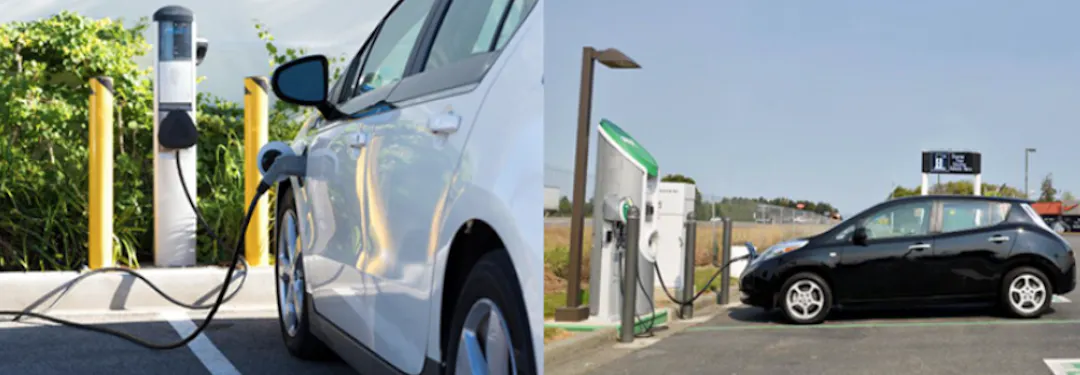
A primary use means the main or principal purpose for which land and/or the structures thereon are used. Electric vehicle charging as a primary use involves providing electricity to customers for a fee through multiple charging station ports grouped together on a single lot. The charging stations are typically mounted to a wall or are installed as freestanding pedestals, and electricity is transmitted through a cord with a handle that connects the port to the electric vehicle. Payment for the service is typically made by customers either online or at the charging stations.
EV charging stations can be offered at three different levels that are determined by the amount of power they supply and the rate at which they can charge a vehicle. Level 2 and 3 chargers are most commonly found in commercial settings. Level 2 chargers can charge a vehicle battery to 80% in a few hours, and Level 3 chargers can provide the same level of charge in approximately 30 minutes.
At this time, EV charging stations in Broomfield have been predominantly installed as an accessory use meaning they are “subordinate or incidental to, and on the same lot or on a contiguous lot in the same ownership, as the building or use being identified or advertised.” These charging stations have typically been Level 2 chargers. Charging stations as accessory uses typically make up a small portion of existing parking lots. This service is generally secondary in nature to the primary use, and the installation of EV chargers is typically included as part of the infrastructure designed for the primary use.
New development in Broomfield must adhere to the adopted codes, including the Colorado Model Electric Ready code requiring installation of EV parking infrastructure to serve the new development.
Proposed Broomfield Municipal Code Changes:
The proposed code update aims to comply with the major elements of HB24-1173. The drafted ordinance does not include EV charging stations as primary permitted uses within residential (including the TOAD), agricultural, or TOD zone districts. The BMC currently requires accessory EV installed-, EV ready-, and EV capable- parking spaces for new developments as part of the Electric and Solar Ready Code. EV chargers are typically permitted as an accessory use in all districts.
The proposed changes to the BMC supported by Broomfield City Council are outlined below:
EV Charging Station as Primary Permitted Use. The drafted ordinance proposes to allow EV Charging Stations as a primary use in most commercial, industrial and mixed use zoning districts. They would be excluded from residential, agricultural, Transitional Overlay Area District, and Transit Oriented Development-zoned properties.
EV Charging Station as an Accessory Use. There are no proposed changes to EV charging stations as an accessory use. EV charging stations and infrastructure are currently allowed to be installed as accessory to a primary use of a property in all zone districts.
Definitions. New definitions proposed in this ordinance include Electric Vehicle (EV), EV Charging Station, and EV Charging Supply Equipment. These new definitions will effectively separate and differentiate the EV Charging Station use from a Gas Station use.
EV Charging Station Equipment Requirements. The essential equipment associated with the operation of the charging station is proposed to have a minimum required 5-foot setback from adjacent property lines, and to be outside of sight clearance areas, as established by Broomfield Standards and Specifications. These potential amendments, if approved by Broomfield, would vary from the required code language in HB24-1173. The purpose of the proposed variation from HB24-1173 is intended to promote safety by requiring a minimum setback from public right-of-way or other property lines, and limiting the placement of equipment at an intersection that could obstruct the visibility of motorists and others in the vicinity of the intersection.
The following table outlines where EV charging stations would be permitted by right if the proposed code update is approved by City Council. Note that the second column is what is being proposed in this code update, and the third column shows what is required by HB24-1173.
BMC Zone District | Proposed Ordinance | CEO Model Code |
Open Space | NP | USR |
A-1 Agricultural | NP | USR |
RR Rural Residential | NP | USR |
E-1, E-2, E-3 - Estate | NP | USR |
R-1 Low-Density Residential | NP | USR |
R-3 Medium-Low Residential | NP | USR |
R-5 Medium-High Residential | NP | X |
R-7 High Density Residential | NP | X |
TOD-1 Transit Oriented Development (TOD) | NP | X |
B-1 Limited Business, B-2 General Business | X | X |
MU-1 Suburban Mixed Use, MU-2 Employment Mixed Use | X | X |
I-1 Limited Industrial, I-2 General Industrial, I-3 Industrial | X | X |
Transitional Overlay Area District (TOAD) | NP | USR |
X - Permitted by Right
USR - Permitted as Use by Special Review
NP - Not Permitted
Ordinance Process and Documents
At the March 17th, 2026 City Council Study Session, Broomfield City Council expressed their support to move forward with modifications to Broomfield’s code.
At the July 7, 2026 City Council 1st Reading, Broomfield Council voted to approve Ordinance No. 2301 related to the EV Charging Code Update on first reading with no amendments. The staff memorandum from the first reading includes a detailed discussion of the proposed code changes. No changes have been made to the ordinance since the first reading.
At the September 8, 2026 City Council 2nd Reading, Broomfield Council voted to approve and adopt Ordinance No. 2301 related to the EV Charging Code Update with no amendments.
Refer to key dates on the right side of this page for scheduled City Council meetings.
The draft ordinance is available in the "Documents" section of this page.
Public Engagement Summary
Following the review of the formal application, public hearings were scheduled in accordance with the application review process timeline. Public notices were be sent to property owners within 1,000 feet of this project, sign(s) were posted on the property and a notice was published in the Broomfield Enterprise newspaper.
Submit your questions about the application below. City and County of Broomfield staff will respond to your question within 2-3 business days.
If you would like to share your feedback with City Council please use the “Comments” tab.

-
Senior Planner

Phone (303)464-5668 Email abradshaw@broomfield.org